
Strength That Doesn’t Shout — The Invisible System Powering Billions
When modern data architecture mirrors the spirit of legends.

You tap LinkedIn 50+ times a day. Every profile, message, feed refresh, powered by one invisible database.
Its name? Espresso.
LinkedIn’s planet-scale NoSQL beast is handling millions of records/second without breaking a sweat.
But studying its architecture late one night, one name kept echoing: Dharmendra.
Bollywood’s He-Man, who carried films like Sholay on his silent shoulders, yet in Satyakam showed that his real power was conviction and vulnerability, not just muscle.
Some legends endure without noise. Some systems power billions without logos.
Espresso does both.
This isn’t trivia; it’s the blueprint for legacy infrastructure.
The Shared DNA of Silent Strength
Concentrated Power
In the massive data centers powering LinkedIn, Espresso stands as a concentrated powerhouse. It is a distributed NoSQL database that handles millions of records per second by partitioning data across numerous MySQL shards using the InnoDB storage engine.
Each query flows seamlessly, ensuring that profiles, messages, and feeds keep moving at lightning speed. Just as a perfect espresso shot squeezes out intense flavor from a small volume of coffee under 9 bars of pressure, Espresso the database compresses immense responsibility into a silent, concentrated core.
Similarly, Dharmendra carried the weight of entire blockbuster films like Sholay on his broad shoulders. His presence commanded the frame without shouting or relying on special effects.
Grace Under Peak Load
Espresso’s strength shines brightest under pressure. With robust MySQL binary-log–based replication and self-healing mechanisms, it survives node failures and network hiccups gracefully while maintaining low-latency service during LinkedIn’s global peak usage.
This steadiness mirrors how espresso coffee maintains a rich, steady crema even during the rush of a busy café morning.
Dharmendra, too, embodied grace amid chaos, delivering calm, memorable performances through six decades of Bollywood, acting steadily and reliably regardless of the demands or changes around him.
Unbreakable Trust
At its core, LinkedIn’s Espresso is the unbreakable source of truth for your professional identity: the profiles you build, the messages you send, the connections you count on. Every update, every scroll depends on a system designed for unwavering reliability.
This trust aligns beautifully with the ritual of a perfect espresso shot, brewed the same way every time, a silent promise kept in every cup.
In parallel, Dharmendra’s legacy was founded on trust: an actor whose strength wasn’t loud but deeply felt, aptly summed up in his famous words:
“Asli taqat awaaz mein nahi…bharose mein hoti hai.”
(Real strength isn’t in the noise—it’s in the trust.)
The Hero You Never See
Think about the last time LinkedIn felt slow; Really slow.
Your feed froze. A message took three seconds instead of one to send. That little loading spinner that makes you wonder if you should refresh.
You probably blamed your wifi. Or your phone. Or “the algorithm.”
But somewhere in a data center, engineers were sweating. Because when Espresso hiccups, even for a heartbeat, billions of people feel it.
Espresso is LinkedIn’s core data system, a distributed NoSQL document database that stores every activity of yours on the platform. It processes millions of records per second. It manages hundreds of terabytes of live data. It does all of this while you are sipping coffee (espresso), completely unaware of it.
No logo. No landing page. No “Powered by Espresso” badge.
Just silent, relentless reliability.
Like Dharmendra walking into frame. No dramatic music. No slow-motion. Just presence.
This is not only a story about architecture, but also about identity.
Why Build Your Own Mountain?
Here’s the thing about LinkedIn in the early 2010s: traditional databases were breaking under load. Relational systems couldn’t keep up. Existing NoSQL stores? They either sacrificed consistency, which is dangerous when dealing with people’s messages and professional data, or they could not model the hierarchical, member-centric data that a social platform needs.
So LinkedIn’s engineers did something audacious.
They built their own from scratch.
Espresso was designed for one mission: to handle the real-time, mission-critical backbone of a platform used by nearly a billion people, without compromise.
High-throughput reads and writes at millisecond latency.
Strong consistency guarantees—your message doesn’t get lost, your connection doesn’t vanish
Flexible schema—social graphs, messaging threads, profiles modeled as hierarchical documents
Seamless scaling across machines without sacrificing reliability
It’s the kind of engineering that doesn’t get headlines. It’s not a shiny new framework. It’s not rewriting everything in Rust.
It’s the digital equivalent of Dharmendra in Sholay, carrying the film on his back while everyone else got the applause.
How Espresso Actually Works
Let me paint you a picture.
Imagine Espresso as a massive library where every book is a piece of your LinkedIn life: your profile, your messages, your articles, and your activities.
The Architecture:
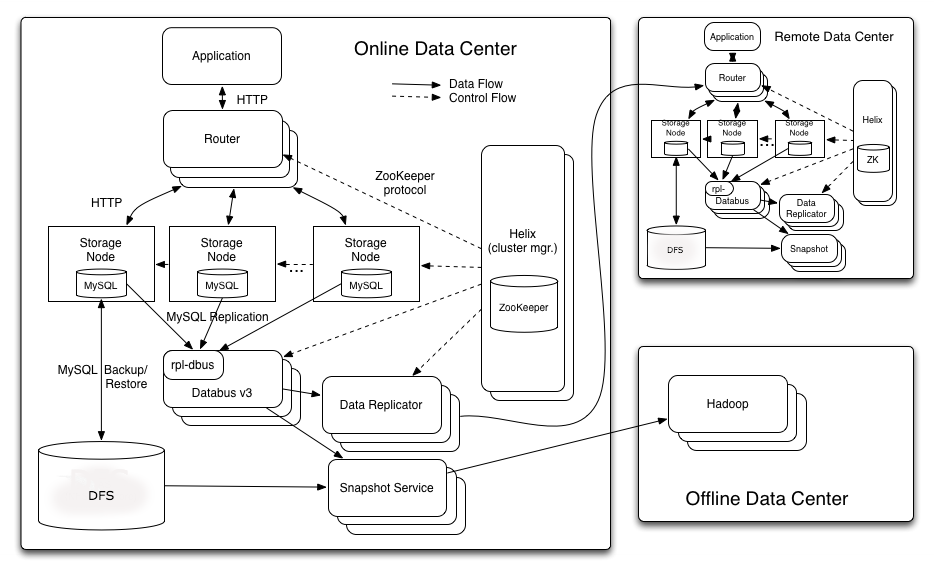
Partitions: Data gets split by a primary key into partitions, each with a master copy and backups. This means no single bottleneck. Millions of people can read and write simultaneously without waiting in line.
Replication: Every change gets copied to replicas, so if one server dies mid-sentence, your message doesn’t vanish into the void. You can tune this, go faster with async replication, or play it safer with semi-sync.
Change Capture: Espresso records every single data change using MySQL binary logs. These logs aren’t just backups; they feed analytics, search indexing, and data pipelines. The entire ecosystem stays in sync without the core system breaking a sweat.
Secondary Indexes: Data are updated synchronously, which means that if you edit your profile and immediately view it, you see your changes. Not a cached version from 10 minutes ago. Not a “refresh to see updates” message. Just consistency.
Self-Healing: Periodic consistency checkers compare master and replica data, catch divergence, and trigger recovery automatically. It behaves like a film director who reshoots a scene instead of shipping a broken cut.
This isn’t the kind of architecture that trends on Hacker News every week.
It’s the kind that quietly keeps everyone else’s features alive.
The Shift from Software to Legacy
Here’s what separates Espresso from most systems:
It’s not just built to scale. It’s built to outlast.
Frontend redesigns come and go, recommendation algorithms get rewritten, leadership changes, and new frameworks are born, hyped, and die.
Through it all, Espresso just keeps humming. Reading. Writing. Committing every click to durable storage.
That’s the difference between software and legacy:
Software is what you ship this quarter.
Legacy is what future teams inherit with gratitude, not resentment.
Dharmendra didn’t just deliver box office hits. He gave generations a definition of “strength with grace” to measure themselves against.
Espresso is doing the same for infrastructure. Defining what “reliable at planetary scale” is supposed to feel like.
If this way of thinking about invisible infrastructure resonates with you, subscribe to ‘Beyond the Stack now‘ for more stories like this.
The Lesson for Builders
In the world of software, loudness doesn’t equal strength.
The systems that truly matter, the ones powering experiences billions depend on, aren’t the ones with the flashiest demos or the most GitHub stars.
They’re the ones that show up. Every day. Without fail.
Like Dharmendra walking onto set, film after film, decade after decade. No tantrums. No drama. Just work.
As engineers, architects, and builders, our challenge isn’t just to ship features.
It’s to build silent heroes:
Systems that endure
Systems that carry their weight without complaint
Systems that become legacies for the people who come after us
The ones that make future developers say, “Thank god someone built this right.”
A Final Tribute
Dharmendra was more than an actor. He was an era-defining force in Bollywood.
Across six decades, he embodied strength with grace, beauty with humility, charisma without arrogance. His roles left an indelible mark on millions and inspired generations.
In the era of fleeting fame, Dharmendra stood firm, quietly powerful and consistently delivering performances that transcended the screen and became part of India’s cultural fabric.
As we reflect on his legacy, it feels fitting to ask:
What are we building that will stand the test of time?
What systems are we designing today that future teams will look at with respect, not regret?
What’s our Espresso? What’s our Sholay?
Rest in power, Dharmendra, the true He-Man whose spirit continues to inspire beyond the silver screen.
And to the engineers who built Espresso and systems like it: thank you for the strength that doesn’t shout.
If you’re fascinated by the invisible infrastructure shaping our digital lives and the timeless human truths that mirror them, subscribe to Beyond the Stack now. More stories coming soon.